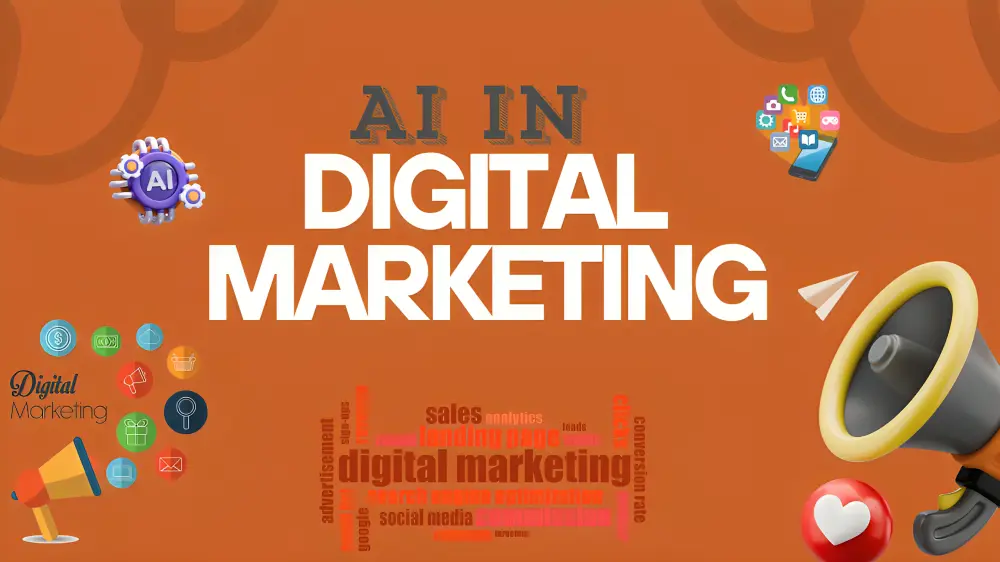

AI has emerged as the state-of-the-art friend for marketers like you, helping you ride towards success in this fast-paced digital world. AI is driving businesses to connect with audiences as never before, from the scale of personalised experiences to the optimisation of real-time campaigns. Regardless of whether we have been self-employed, experienced marketers, or just curious about the future and how AI in digital marketing will change, various aspects of learning and understanding AI can promote combinations of creativity, efficiency, and growth.
The Evolution of AI in Digital Marketing
Digital marketing has been based on data and creativity since time immemorial, but with artificial intelligence aggregating information in a fraction of a second, it is driving the growth of its practice even more than before. Very basic automation tools turned into some truly sophisticated systems that were basically capable of predictive analysis, generative content, and autonomous decision-making.
By 2026, AI will no longer be an experimental state where it’s merely a new, shiny object but will truly be the foundation of modern marketing workflows. AI can easily be integrated into platforms such as Google Workspace, HubSpot, and Adobe, allowing it to assist with everything from idea generation all the way up to performance reporting. This shift will allow human marketers to do what they are best at – strategy, storytelling and innovation – while AI does the heavy lifting.
Key applications of AI in Digital Marketing
1. Hyper-Personalization at Scale
One of the most exciting aspects of AI in digital marketing is its capability to create personalized experiences for each customer. AI uses previous interactions, behaviour, and preference data to suggest products, tailor emails, and provide the right ads.
For example, predictive analytics that help brands anticipate needs or real-time data to dynamically adjust the content accordingly. This can result in not only engagement but also potentially high conversion rates and retention.
2. Generative AI for Content Creation
Gone are the days of staring at a blank page. Tools such as ChatGPT, Jasper and Claude are examples of generative AI that can help you brainstorm ideas and draft a blog post or write a caption for social media posts, videos or images. Model-based tools such as Sora or Kling AI take the chore out of video production—the high-quality products they offer are now readily available to teams both big and small.
You can produce content 84% faster on average while maintaining consistency in your brand voice, freeing up your time to focus more on strategic oversight.
3. AI-Powered SEO and Search Optimization
We are moving away from keyword-focused SEO to “search everywhere optimisation”. AI is learning a deeper level of understanding of user intent, with AI overviews and conversational search (Google AI, ChatGPT Search, Bing Copilot)
The kind of data where marketers optimise for AI, answers to the question, structured data, and visibility across platforms. Surfer SEO and Semrush are two examples of tools that employ artificial intelligence (AI) to analyse the competition in your niche, recommend content optimisations tailored to shifting user search behaviour, and offer content briefs.
4. Smarter Advertising and Campaign Management
The best use of AI is in paid advertising, where it can optimise the bid, target precise audiences and change a campaign on the fly. By analysing data related to performance, platforms can detect what works best, avoid wastage, and improve ROI.
AI agents (or, as they say, super agents) can automate cross-channel tasks very easily without requiring in-depth coding knowledge – from scripting to basic tasks alongside trend analysis.
5. Advanced Analytics and Customer Insights
AI transforms unstructured data into alerts. Predictive models track trends, customer churn, or campaign success, while social listening tools help you measure sentiment from millions of conversations. By working with data, this translates into better decisions and more proactive actions.
Emerging Trends in 2026
As we navigate 2026, several trends are defining AI in digital marketing:
- Agentic AI and Automation: AI agents handle end-to-end customer journeys, from personalized recommendations to reorders, creating seamless experiences.
- Human-AI Collaboration: The best results come from combining AI’s efficiency with human creativity and judgement. Authenticity remains key in an AI-generated world.
- Privacy-First and Ethical AI: With growing concerns around data, brands are prioritising transparent, consent-based practices and bias mitigation.
- Multimodal Content: AI generates text, video, audio, and interactive experiences, dominating short-form video and social commerce.
Issues arise regarding possible shifts in employment (many experts contend that adaptation will result in a net gain), the necessity for supervision to prevent cookie-cutter output, and avoiding violations of compliance standards.
Getting Started with AI in Your Marketing Efforts
You don’t even have to be a tech whiz to take advantage. Begin with smaller ones and test-free tools such as Google Gemini or ChatGPT for ideation, then tier up to those platforms suitable for your industry. Concentrate more on training, goal-setting, and, of course, the verification of outputs from an AI sense against your brand.
Summary: Embracing the Future
AI in digital marketing revolutionizes the way brands find, engage & retain customers — smarter 1:1 personalisation, faster content with dynamic creativity and sharper insights all through data-driven solutions. In 2026 and beyond, it isn’t only for the AI masters… success will go to those who combine the strength of AI with balanced old-school practices and their customers at heart.
The future of the world is intelligent, efficient, and unbelievably exciting. With deliberate implementation of these tools, marketers can not only keep up but also cut through the noise to build deeper connections in a digital-first world. Ready to level up? The AI revolution for marketing is upon us—now the ball’s in your court.
FAQ’s
Q1. Which AI is best for digital marketing?
Ans. No single AI is the best for digital marketing; it’s all based on your specific goals. In fact, true professionals in their respective fields use multiple tools instead of just one platform.
Q2. How is AI used in SEO?
Ans. With AI, SEO is driven by search trend analysis, intelligent keyword recommendations, and crafted content that your users relate to. It automates technical fixes, monitors performance and forecasts algorithm updates – meaning less guesswork for you to get a higher rank while being driven towards quality.
Q3. Is ChatGPT good for SEO?
Ans. Yes, ChatGPT is good for beginners in SEO. It aids in keyword brainstorming, draft creation, meta description writing, and content idea suggestions within seconds. But always tweak them for originality, add your unique perspective and use the right SEO tools—AI-created content cannot rank without quality and strategy.