
Become a firefighter is a deeply respected job, and it brings a lot of satisfaction. It involves physical challenges, working with a team, providing emergency medical help, and serving the community directly. If you’re interested in this path, this guide will take you through what’s needed, how long it takes, and steps to get ready, based on what most U.S. departments do today.
The process can be tough and competitive, yet it’s also organised and doable for those who start early and stick with it.
What does a firefighter actually do?
Firefighters do a lot more than just deal with building fires. Most of their calls are about medical situations, car crashes, dangerous substances, technical rescues, and helping the public. On a typical shift, you may:
- Provide emergency medical care.
- Extinguish fires and perform search and rescue.
- Conduct fire prevention inspections and public education
- Maintain the equipment and the firehouse.
- Train continuously in firefighting tactics, EMS skills, and fitness.
Career firefighters typically work long, 24-hour shifts and then get 48 or 72 hours off. On average, they put in 48-56 hours a week. The job requires a lot of physical effort, emotional resilience, and teamwork.
Basic requirements to become a firefighter
Requirements vary by department and state, but these are the common baselines in 2026:
- Minimum age of 18 (many career departments prefer or require 21)
- High school diploma or GED
- Valid driver’s licence with a reasonably clean record
- Legal authorisation to work in the United States
- Ability to pass a thorough background check (felony convictions are usually disqualifying)
- Medical fitness, including vision, hearing, and overall health standards
- Successful drug screening
A lot of departments really like or need you to have EMT certification before getting the job. They might also appreciate if you have Firefighter I/II certification, college credits in fire science, some military background, or if you’ve spent time volunteering in the fire service.
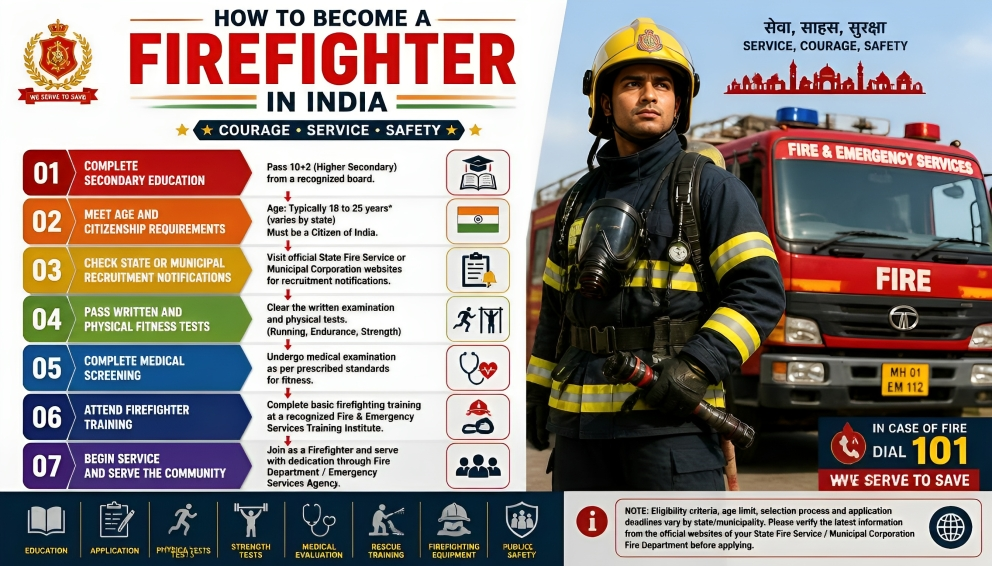
Step-by-step path to become a firefighter
Here is the typical sequence most successful candidates follow:
1. Confirm you meet the minimums and start physical preparation early
Start working on strength, endurance, and practical training well ahead of time. Pay attention to climbing stairs, carrying a set weight, dragging, and building core muscles. This is a big factor in the hiring process.
2. Earn your EMT certification
Many departments see EMT training as important since most calls deal with medical issues. Basic EMT courses typically last a semester, around 150 to 180 hours, and involve classroom learning, skill-building, and clinical practice. Once you finish, you need to pass the National Registry exam and get state-certified. Getting paramedic certification helps you stand out more when applying for jobs.
3. Consider Firefighter I and II certifications
In some states, you might finish these at a community college or local academy before you apply. In other places, the department offers the training after you’re hired. These credentials show dedication and can boost your standing.
4. Monitor job openings and apply widely
Fire departments don’t hire all the time. Keep an eye on city and county job listings, sites like FireJobs, and department pages. Try applying to several places since hiring times vary and there’s a lot of competition.
5. Pass the written examination
These tests usually include reading, math, mechanical skills, and decision-making. Practice tests and study guides are easy to find and are a good use of time and resources.
6. Complete the Candidate Physical Ability Test (CPAT) or department
The CPAT is the most common standard. Candidates wear a 50-pound vest and tackle eight nonstop challenges: climbing stairs with more weight, dragging a hose, carrying equipment, raising a ladder, breaking through, searching, dragging a rescue, and breaking through ceilings. All of this must be done in under 10 minutes and 20 seconds. Focus your training on these tasks.
7. Succeed in the interview, background investigation, and medical/psychological screening
Oral boards look at your character, how well you work with others, how quickly you make decisions, and what drives you. Once you get a conditional offer, they do detailed background checks, and you’ll have medical and psychological tests.
8. Attend the fire academy
After getting hired, recruits go through a tough training programme that can last weeks or even months. They learn about how fires behave, how buildings are made, how to handle hoses and ladders, and skills for search and rescue. They also get trained in handling dangerous materials and emergency medical care. These programmes are often full-time and really physically demanding.
9. Complete the probationary period
New firefighters usually go through 6 to 18 months of guided field training. During this time, they use what they learned at the academy on actual calls and keep being assessed.
It usually takes about 12 to 24 months from starting EMT training to working your first solo shift. This depends on how fast you finish your certifications and how long it takes to get hired by a department.
Physical and mental preparation tips
Success depends heavily on consistent preparation:
- Train with weighted vests and functional movements that mimic CPAT events.
- Build cardiovascular endurance through running, rucking, and stair work.
- Practice teamwork and communication skills—firefighting is rarely solo.
- Develop mental resilience. Exposure to trauma is part of the job; many departments now emphasise peer support and mental health resources.
- Maintain a clean lifestyle. Drug use, serious traffic violations, or certain medical conditions can end candidacy.
Helping out at your local fire department or with an ambulance crew can give you great experience and make your applications stand out.
Salary, Benefits, and Career Outlook
According to the U.S. Bureau of Labor Statistics, firefighters earned a median yearly salary of $59,280 as of May 2025. Starting salaries differ greatly depending on the region and department. You’ll find higher wages in places like California, Washington, and New York where unions are strong. Extra earnings often come from overtime, working as a paramedic, and getting raises over time.
You usually get good health insurance, retirement plans, paid time off, and chances for special training like hazmat or technical rescue. You can move up to roles like engineer, driver, lieutenant, captain, battalion chief, or chief. There are also roles like fire investigator or inspector.
From 2025 to 2035, job growth is expected to be around 4 percent, which is similar to the average for all jobs. Each year, we’ll see many job openings mainly due to people retiring or moving on to other roles.
Practical Advice for Standing Out
- Apply to multiple departments and keep certifications current.
- Document any relevant experience (military, EMS, volunteering, coaching, or leadership roles).
- Prepare thoroughly for oral boards with structured answers that show integrity, composure, and a service mindset.
- Stay in peak physical condition year-round.
- Research each department’s culture, apparatus, and community needs before interviewing.
Teams appreciate when you can be counted on, stay humble, and work well with others during tough times.
Final Recommendation
If you are serious about this career, begin with the essentials: check what nearby departments need, sign up for an EMT course, and kick off some organised physical training right away. The path to become a firefighter rewards preparation, keep trying, and truly want to help others. It’s tough work, but if you make it, you’ll find meaning, teamwork, and the opportunity to really make an impact each day.
See what jobs are available right now, chat with local firefighters, and make your first real move this month. To join the fire service, you need to be skilled and committed. With the right preparation, you could be part of it.