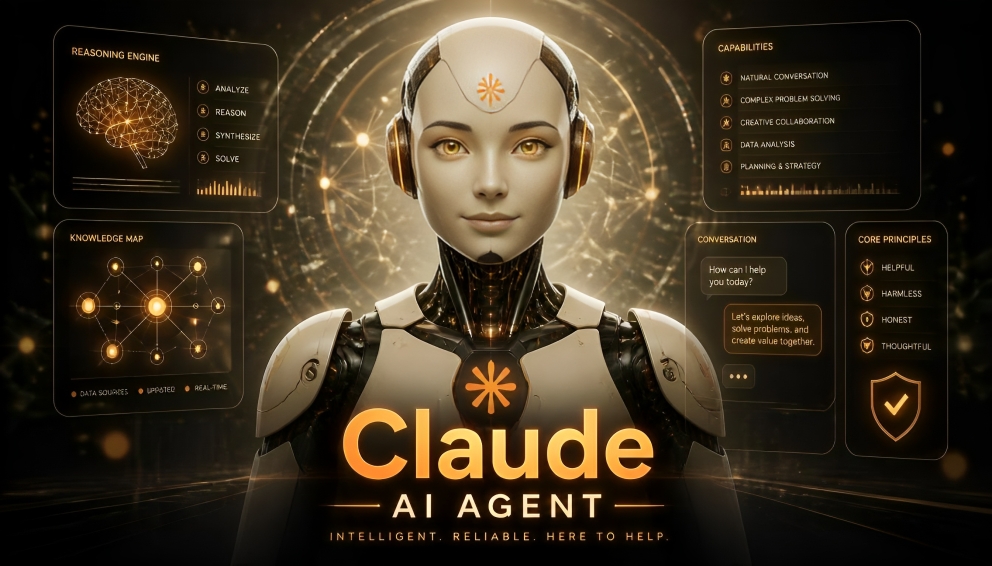

In 2026, artificial intelligence has advanced way past just giving basic chat replies. A key player in this progress is the Claude AI agent from Anthropic. These agents aren’t just about answering; they also plan, handle tools, operate computers, code, and finish complicated tasks with little help from people.
This guide covers everything about a Claude AI agent: what it is, how it works, its main features, practical uses, new updates, and useful tips for better use. Whether you’re a developer, a business person, or just interested, you’ll get simple info from Anthropic’s latest platform.
What is a Claude AI agent?
A Claude AI agent is a smart system based on Anthropic’s Claude models, like Opus, Sonnet, and Haiku. It can operate on its own. Unlike regular chatbots that need a prompt to reply, this agent can figure out goals, pick the right tools, carry out tasks, and keep checking until everything’s done.
Claude agents are really good at connecting the dots and using different tools. They can check out files, execute code, surf the internet, work with software using screenshots and a keyboard or mouse, and manage several smaller agents together. Anthropic focuses on keeping things safe by using permissions, sandboxes, and letting humans keep an eye on things.
Claude is great for coding, doing research, handling productivity tasks, and working on long projects.
Key features of Claude AI agents
Claude agents stand out because of several integrated capabilities:
- Computer Use — Claude can see a screen via screenshots, then click, type, scroll, and navigate applications the way a person would. This works in desktop environments and browsers.
- Tool and API Integration—Agents call external tools, connectors (Gmail, Slack, calendars, code repositories), and custom functions.
- Claude Code—A terminal- and IDE-based agentic coding tool that understands codebases, writes and edits code, runs tests, and handles Git workflows autonomously.
- Claude Managed Agents — A hosted platform that provides the infrastructure (sandbox, memory, permissions, scheduling) so developers can deploy production agents without building the full harness themselves. Claude Duet — A proactive agent (research preview for Pro and Max plans) that monitors connected apps, sends morning briefs, and handles tasks in the background.
- Artefacts—Claude creates editable, shareable outputs such as documents, decks, dashboards, designs, and interactive tools that appear alongside the conversation.
- Skills and Memory — Agents load specialised instructions or retain context across sessions for more consistent performance.
- Multi-Agent Orchestration—One Claude can coordinate many subagents working in parallel on complex projects.
It uses the latest models that have big context windows, perform well with code, and are more reliable for lengthy tasks.
Benefits of using a Claude AI agent
Organizations and individuals gain several practical advantages:
- Faster completion of complex, multistep work that would otherwise require constant human direction.
- Higher quality output on coding, analysis, research synthesis, and document creation.
- Reduced operational overhead—Managed Agents handle sandboxing, state, and permissions.
- Scalability through parallel subagents and scheduled runs.
- Stronger safety controls compared with many open agent frameworks, thanks to Anthropic’s constitutional AI approach and product-level safeguards.
- Flexibility across consumer apps (Cowork, Duet) and developer platforms (API, Claude Code, Managed Agents).
In the real world, developers might use Claude Code to reorganise big codebases. Teams could handle security checks or data processing with Managed Agents, while professionals might turn to Duet to help manage emails, calendars, and project tasks every day.
Latest Developments in 2026 Prioritisation
Anthropic has moved rapidly on agent capabilities. Key updates include:
- Claude Duet research preview (October 2026) for proactive, always-on assistance.
- Claude Managed Agents public beta (launched earlier in 2026) with memory, multi-agent workflows, webhooks, and scheduled deployments.
- Computer use improvements, including batch actions and broader availability in Claude Code and Cowork.
- New models such as Claude Opus 5.5 (stronger agentic coding and long-running work at a lower cost) and Claude Haiku 5.5 (fast and cost-efficient for high-volume agent tasks).
- Expanded marketplace of partner agents for security, observability, and productivity.
- Enterprise features are focused on security centres, spending tracking, and admin controls.
These updates help make Claude agents more dependable for production, with a strong focus on safety and user control.
How to get started with a Claude AI agent
1. Choose your entry point.
- Everyday users: Start in Claude.ai or the desktop app with Cowork or Duet.
- Developers: Use Claude Code in the terminal/IDE or the Claude API with managed agents.
2. Enable necessary capabilities
Connect relevant apps, turn on computer use if needed, and review permission settings.
3. Define clear goals.
Give the agent a specific objective, constraints, and success criteria. Good instructions improve reliability.
4. Start simple and expand.
Begin with single-tool tasks, then move to multistep or multi-agent workflows.
5. Monitor and refine
Review outputs, adjust permissions, and use memory or skills for recurring work.
Make sure to always stick to Anthropic’s safety instructions, especially when letting agents use computers or access sensitive systems.
Best practices for effective and safe use
- Prefer connectors and precise tools over pure computer use when available (they are faster and more reliable).
- Keep human-in-the-loop for high-stakes actions; use approval gates.
- Scope permissions tightly and use sandboxes for experimental agents.
- Break large goals into clear phases or subagents.
- Track costs and usage, especially on long-running or parallel sessions.
- Stay updated on model and platform changes, as Anthropic iterates quickly.
Real-World Applications
Claude agents are already used for:
- Autonomous software development and code review
- Research synthesis across large document sets
- Customer support ticket triage and response drafting
- Financial analysis and report generation
- Security scanning and vulnerability assessment
- Daily productivity automation (scheduling, briefing, file organisation)
- Creative and design workflows via artefacts
People working in tech, finance, law, and creative fields say they save a lot of time when agents take care of the regular or step-by-step parts of their jobs.
Summary and Recommendation
In 2026, a Claude AI agent stands out as a sensible and safe choice for using cutting-edge AI for real tasks. Anthropic has developed a complete setup, offering everything from Claude Code’s self-directed coding to Managed Agents’ support for production systems, and Duet’s helpful guidance, all blending skill with safety.
When you’re just beginning, try simple tasks in the Claude desktop app or on the web. Developers and teams might want to look into Claude Code and Managed Agents for systems that can scale and are ready for production. Focus on permissions, track everything, and keep human oversight.
Technology keeps moving forward fast. People who learn to guide Claude agents well today will be ready to take advantage of agentic AI’s productivity boost. Begin with a clear project, check the outcomes closely, and then build on it-Claude is here to help you every step of the way.