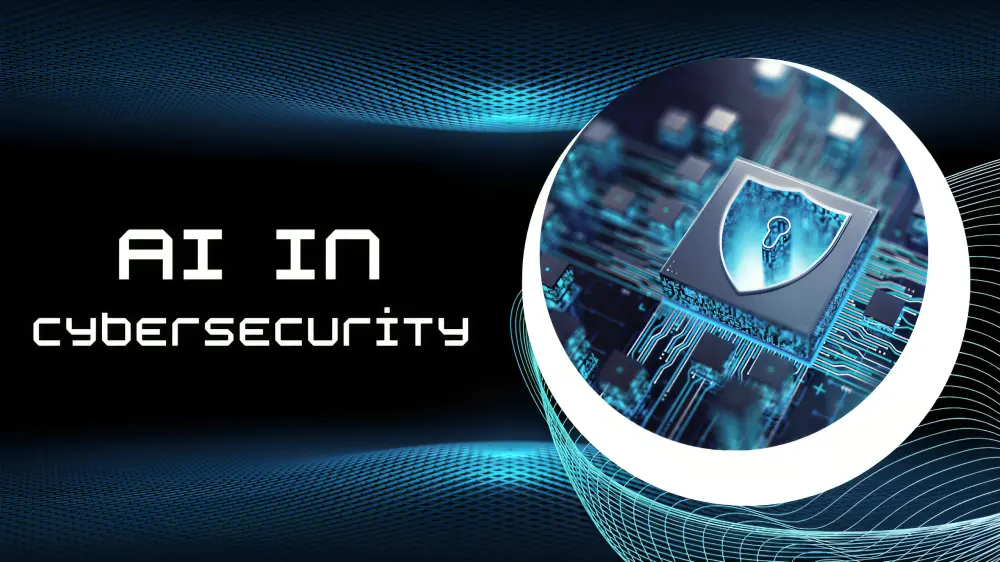

Today, with global integrations reaching unprecedented heights, the sophistication and frequency of cyber threats are at an all-time high. Ransomware, infectious pesticides affecting businesses, and espionage attacks from nation-state actors are focusing on vital pieces of infrastructure. So here comes artificial intelligence (AI), the newfound good friend that is changing today how we guard digital assets. AI in cybersecurity isn’t just a fuzzy word anymore, but is also becoming a critical technology for bypassing the attackers who are already using this same technology.
This article discusses how AI changes everything, what it actually does, the obstacles to overcome, and a glimpse of the future that crystallises for professionals, business leaders, and simply anyone curious about how safe the digital world will be or not.
The Growing Need for Advanced Cybersecurity
Traditional security tools rely on rules and signatures to identify known new dangers. However, newer attacks — such as zero-day exploits and polymorphic malware — frequently outsmart these systems. Cybercriminals are working at machine speed, scripting approaches to search for weaknesses and attack multiple targets simultaneously.
One such area is AI in cybersecurity, which helps systems learn, adapt, and respond dynamically. Whether it is identifying small patterns which humans may fail to observe or reducing alert fatigue from security teams by processing huge volumes of data as it happens in real-time.
Key Applications of AI in Cybersecurity
1. Enhanced Threat Detection and Anomaly Identification
AI is a king when it comes to behaviour analysis and anomaly detection. Machine learning models are trained to create a baseline of “normal” user activity, network traffic, and system behaviour. AI flags them instantaneously whenever there are deviations – like logins at unusual hours & attempts to exfiltrate data.
- Predictive analytics: AI predicts threats based on analysing threat intelligence feeds and historical data.
- Real-time monitoring: Any sort of advanced persistent threat (APT) or insider risk that signature-based tools miss can be detected by systems.
The most significant wins have been that we are shifting from reactive to proactive defence.
2. Automated Incident Response
Speed is critical in cybersecurity. AI automates several repetitive tasks such as isolating compromised devices, blocking bad IP addresses, or even applying patches. By significantly reducing response times from hours or days to minutes.
Security Orchestration, Automation, and Response (SOAR) platforms, enhanced with AI, enable “agentic” systems—autonomous AI agents—to handle initial triage, freeing human analysts for strategic work.
3. Phishing Prevention and Social Engineering Defense
Phishing emails and some deepfakes: Generative AI has made these things more convincing. Luckily, this is when defensive AI comes into play by analysing the context of an email and how the sender typically behaves, along with any linguistic anomalies. It also detects synthetic media used to carry out scams.
4. Vulnerability Management and Threat Intelligence
Manual reviews of code and systems are cumbersome, and AI scans them for weaknesses in minutes. The data is also aggregated on a worldwide basis to support actionable intelligence so that companies can prioritise threats.
Benefits That Make AI a Game-Changer
- Scalability and Efficiency: AI handles vast datasets without tiring, reducing false positives and allowing smaller teams to manage enterprise-scale security.
- Cost Savings: Automation lowers the burden on skilled (and expensive) cybersecurity professionals.
- Adaptability: Models continuously learn from new threats, improving over time.
Industry reports have found that organizations employing AI-powered solutions experience marked increases in detection rates and quicker suppression of breaches.
Challenges and Risks in AI-Driven Security
While powerful, AI introduces new complexities:
- Adversarial Attacks: Hackers use AI to evade detection, poison training data, or launch “machine-speed” campaigns.
- Shadow AI: unauthorised AI tools deployed by employees create blind spots and increase exposure.
- Bias and Explainability: “Black box” models can make decisions that are hard to audit, leading to trust issues.
- New Attack Surfaces: AI agents and chatbots become targets for credential theft or prompt injection.
Ethical considerations, data privacy, and the need for human oversight. An over-dependence on AI, in the absence of governance, increases the risk.
Latest Trends and Developments (2025–2026)
As of 2026, the AI-cybersecurity arms race is in full swing:
- Agentic AI: Autonomous agents are automating both attacks and defences, with “Agentic SOCs” emerging for supercharged operations.
- AI-Powered Phishing and Deepfakes: GenAI lowers barriers for sophisticated social engineering.
- Cloud and Identity Focus: Protection for AI systems, cloud environments, and identities is paramount.
- Regulatory and Governance Push: Organizations are building AI governance layers, with emphasis on transparency and zero-trust principles.
AI is now considered the single biggest driver of change in cybersecurity, creating both new innovations and challenges, according to reports.
The Future Outlook
The future will be tighter integration of AI with quantum-resistant cryptography, privacy-preserving techniques, and a predictive security ecosystem. The winners will be those who merge the acceleration of AI with human judgement and strong governance.
Hybrid approaches — those that use AI to enhance humans rather than replace them — will reign. Continuous learning along with ethical frameworks and working across sectors will be essential ingredients to build strong defences.
Summary: Embracing AI Responsibly
AI in cybersecurity does mark a significant step change in how we protect our digital assets. It is designed to detect faster, respond smarter, and protect proactively against an evolving threat landscape. At the same time, it requires caution around the inventions on which it depends.
If you understand not only the great potential of AI but also its greatest pitfalls, organizations and users can use AI to respond to threats rather than react to them. A future of cybersecurity thrives on intelligence, adaptability and collaborative effort—so keep your wits about you; invest wisely, and remember that human-AI synergy is the best path forward. Your digital resilience will depend on it.
FAQ’s
Q1. What types of AI are used in cybersecurity?
Ans. AI in cybersecurity primarily relies on machine learning to identify irregular patterns and predict risks; deep learning — which can recognise very complex malware; natural language processing to help detect phishing emails; and behaviour AI, which learns regular user habits to notify of intrusions. A combination of these technologies provides smarter, faster, and more proactive protection.
Q2. What is the future of AI in cybersecurity?
Ans. The future of AI in cybersecurity is proactive and powerful. AI will forecast threats in real-time, automate defenses, and even outsmart hackers to create a safer, more intelligent world. Subject to human oversight and ethics, it’s charged with more robust defences against emerging hazards.
Q3. Can AI replace human security analysts?
Ans. No, AI cannot replace human security analysts entirely. AI shines at analysing huge datasets, recognising patterns, and reacting to threats in real time. But humans have the intuition, ethics, creativity in new situations, and strategy that machines cannot mimic. A combination of AI speed together with human expertise is the best defence, allowing security to become smarter and faster.