
Artificial intelligence is changing the way businesses interact with customers to optimise campaigns and expand. AI in marketing enables teams to achieve hyperpersonalised content down to real-time analytics, which indeed works seamlessly and at speeds and precision never imagined before. The guide covers everything you need to know from an approachable angle, whether you are an experienced marketer or just exploring new tools.
What is AI in Marketing?
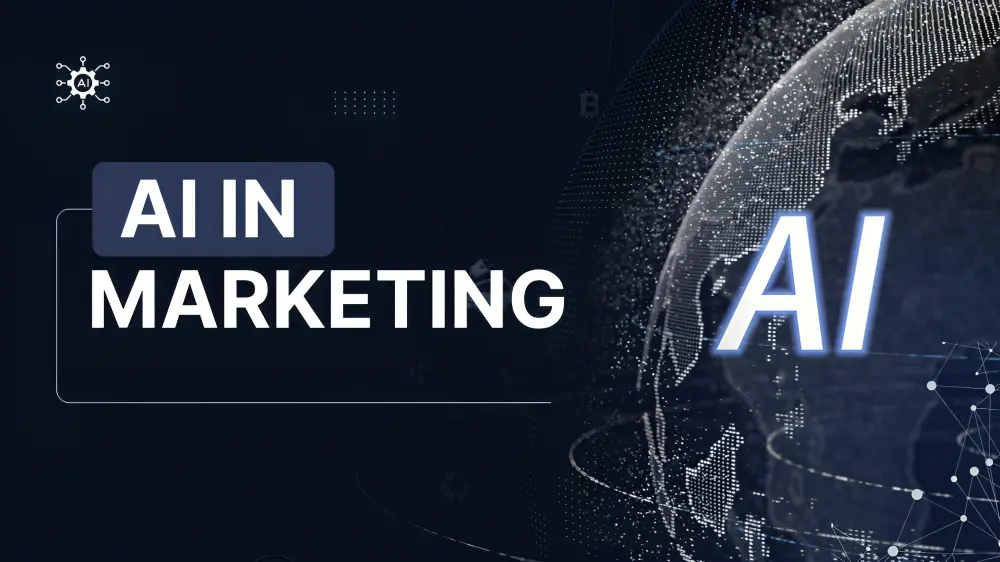
AI in marketing refers to the application of artificial intelligence technologies, including machine learning algorithms, NLP and generative AI (large language models), to automate, improve, and personalise marketing. To be more specific, it does way more than just simple automation by processing massive quantities of data to provide actionable AI insights, analysing the metrics, predicting behaviour, and creating unique experiences on demand.
This means tools that can draft emails, segment audiences, optimise ad spend or even compose entire video campaigns in practice. In 2026, AI progresses from experimental add-ons to the backbone of the marketing machinery, from audience discovery to orchestrating campaign performance.
Key Benefits of Embracing AI
Businesses adopting AI-powered strategies are seeing tangible results:
- Efficiency and Speed: AI dramatically reduces the time to create content (some reports claim 84% faster) and allows a marketer to focus on strategy and creativity.
- Hyper-personalisation: Instead of one-size-fits-all campaigns, AI enables real-time tailoring based on behaviour, preferences, and context, leading to higher engagement and conversion rates.
- Data-Driven Insights: By processing complex data sets in seconds, AI initiatives suggest actionable recommendations and predictive analytics that enhance ROI and decision-making.
- Scalability: Marketers can handle larger audiences and more channels without proportional increases in team size or budget.
In the last couple of months, we have seen reports stating how 97% of marketers who use AI are gaining new ways to grow and becoming daily tools for the vast majority.
Practical Applications and Use Cases
AI shines across the marketing funnel. Here are some of the most impactful areas:
Content Creation and Optimization
From the ideation process to drafting blog posts, social media captions, emails and even video scripts, generative AI can do it all. With human oversight, tools are able to support at-scale localisation and A/B testing – all while maintaining brand voice and authentic tone. By 2026, quantity will be out of the picture; it will be all about “creative intelligence” – where AI is used to improve and optimise rather than just generate.
Audience Segmentation and Personalization
Behavioural, demographic, and predictive data are then used to cluster customers into more nuanced segments from scratch using AI. This supercharges dynamic website experiences, social ads, and product recommendations (Netflix-style suggestions for every brand touchpoint).
Advertising and Campaign Management
Programmatic advertising employs AI for real-time bidding and optimisation. As discussed in the article, AI agents are able to manage and adjust budgets; test creatives; and predict performance autonomously, allowing campaigns to respond more quickly to market conditions efficiently.
Analytics and Customer Insights
‘Predictive analytics’ means the things you’ve got to worry about, like trends, churn risk, and lifetime value. Monitor negative content on social media and reviews to drive brands to get ahead of issues and measure actual campaign impact.
Chatbots and Conversational Marketing
Advanced AI chatbots can provide 24/7 availability and support, qualify leads before handing them over to a human DSL team, and even carry out sales conversations, freeing your workforce for other important tasks.
Latest Trends Shaping AI in Marketing (2025–2026)
The landscape continues to evolve rapidly:
- Agentic AI and Autonomous Campaigns: AI agents that plan, execute, and optimise whole workflows are emerging. Such systems handle complex tasks with little human assistance.
- Generative Engine Optimisation (GEO): As AI touches on search like Google’s AI Overviews, brands are sending content to conversational searches and omnichannel queries rather than simple words for optimisation.
- Synthetic Data and Augmented Audiences: AI creates realistic synthetic data to experiment with strategies and examine customers without the privacy risks.
- Human + AI Collaboration: While 97% of marketers use AI to varying degrees, there is a general agreement that the best output still requires input from human beings for creativity, ethics, and emotional impact.
- Privacy-First and Ethical AI: With growing regulations, brands are prioritising transparent data use and bias mitigation.
Those trends point toward an AI-native future—one in which the technology complements rather than replaces human ingenuity.
Challenges to Consider
AI isn’t without hurdles. There are also concerns about using this technology, such as having overdependence and creating generic content, data privacy issues, potential bias in algorithms, and finally, the need for experts who understand it to drive the tech. But with successful implementation comes clarity around the strategy and quality data, and it also needs to be done by humans who will monitor how AI is used to deliver on the promise.
The Road Ahead
AI will only continue to break channel barriers, leading to omnichannel experiences and more predictive, proactive marketing. The next wave of marketing will be defined by agentic systems and multimodal AI (text, image, video — you name it), making effective marketing easier while inciting greater creativity from marketers.
In summary, AI in marketing is a great opportunity to be able to provide more relevant and effective campaigns at scale and speed! With its strengths embraced and challenges tackled, businesses will be able to build better customer relations and glean sustained growth amid an increasingly competitive terrain. The next strategic frontier is the merger of AI technical precision with human insight — start experimenting today and be ahead of tomorrow.
FAQ’s
Q1. What is the 3 3 3 rule in marketing?
Ans. The 3-3-3 rule in marketing is a simple focus strategy: Pick 3 core messages about your brand, target 3 key audience groups, and promote them across 3 main channels where your customers hang out.
It cuts overwhelm, increases clarity, and makes your messaging stick—great for busy marketers!
Q2. What are the 7 pillars of marketing?
Ans. The 7 Pillars of Marketing (7 Ps):
Product (what you offer), Price (what it costs), Place (where customers find it), Promotion (how you spread the word), People (your team & customers), Process (smooth delivery), and Physical Evidence (proof of quality). Master these for a strong, customer-focused strategy.
Q3. What is the 7 times rule in marketing?
Ans. The 7 Times Rule in marketing is a simple principle: The average person needs to hear or see your messaging 7\+ times before even thinking about recalling your brand and actually doing something with it.
Reinforcing repetition in emails, ads, and social media establishes trust and familiarity, leading customers step by step from “Who are you? to “I’ll buy from you!”