
Choosing to become an electrician is a smart and popular career move in India these days. The boom in construction, manufacturing, renewable energy, and electric vehicles means skilled electricians are needed everywhere – from homes and factories to solar projects and infrastructure. If you’re looking for a hands-on job that pays well and might lead to working for yourself, this is a great path to think about.
This guide shows you how to become an electrician by following familiar and well-known paths. It talks about who can apply, the training needed, getting certified, licences, pay, and handy advice based on today’s standards.
What does an electrician do?
An electrician installs, maintains, tests, and repairs electrical systems and equipment. Daily work can include:
- Domestic and commercial wiring
- Installing switches, lights, fans, and distribution boards
- Working with motors, transformers, and control panels
- Troubleshooting faults and ensuring safety standards
- Installing solar panels or EV charging systems (growing areas)
Safety is super important when dealing with live electricity. Making sure everyone is trained and certified keeps both workers and clients safe.
Eligibility criteria to become an electrician
The most widely accepted entry point is the ITI electrician trade.
Basic requirements:
- Passed Class 10 (preferably with science and mathematics)
- Minimum age is usually 14–16 years (varies slightly by state).
- The upper age limit differs by state and category; many government ITIs have flexible upper limits.
Studying science and maths can make it easier to understand circuits, do calculations, and read technical drawings, but you can usually get in with any Class 10 background.
Step-by-step guide: How to become an electrician
Here is the clear, practical path most people follow:
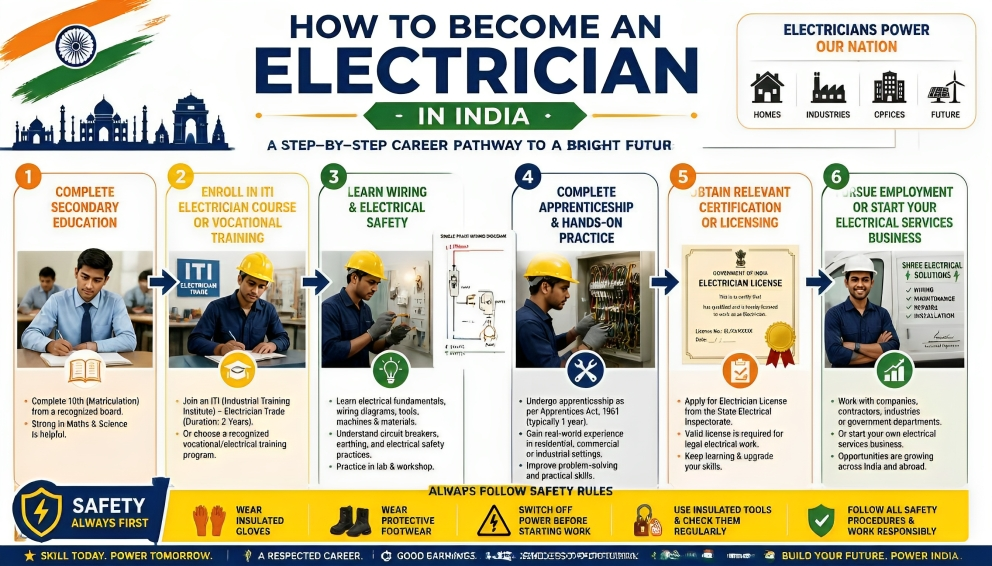
1. Complete Class 10
Finish secondary school from a recognised board. Strong basics in science and maths will make the ITI course easier.
2. Join an ITI Electrician Course
Apply to a government or private Industrial Training Institute (ITI) for the electrician trade under the Craftsman Training Scheme (CTS).
- Duration: 2 years (approximately 2400 hours)
- The curriculum covers basic electricity, wiring, motors, earthing, safety, workshop calculations, engineering drawing, and practical skills.
- Certification: National Trade Certificate (NTC) issued through NCVT/DGT
Getting admitted typically depends on your Class 10 grades. Some states have entrance exams or counselling. Government ITIs cost less, while private ones might have better facilities in some areas. To find the latest admission dates, visit your state’s skill development or ITI website.
3. Complete Apprenticeship Training
After ITI, register for an apprenticeship under the National Apprenticeship Promotion Scheme (NAPS) or through companies, railways, power utilities, or PSUs.
- Typical duration: 1 year
- You receive a stipend (often ₹7,000–₹13,500 per month, depending on the organisation).
- You gain the National Apprenticeship Certificate (NAC).
Having this experience can really boost your chances of getting a job and is often needed or wanted for lots of government and industrial positions.
4. Obtain the Required Licence
If you want to work on your own or as a contractor, you usually need a wireman or electrical contractor licence from the electrical inspectorate or labour department in your state.
Requirements vary by state but usually include:
- ITI certificate in the electrician or wireman trade
- Practical experience (often 1–2 years or more)
- Passing a written and/or practical examination in some states
Licences come in different categories depending on the voltage and job type, like home, business, or industrial work. Make sure to check your state’s specific rules.
5. Start Working and Build Experience
Begin as a junior electrician, helper, or trainee. Options include:
- Private construction and electrical contracting firms
- Manufacturing units and factories
- State electricity boards or power distribution companies
- Railways, power grids, and other PSUs (through recruitment exams)
- Self-employment after obtaining a licence
Many people start with residential and small commercial jobs and later specialise.
Alternative Paths
- Diploma in Electrical Engineering (3 years after Class 10) – opens doors to higher technical roles and supervisor positions.
- Short-term skill courses or private training centres – useful for basic domestic work, but formal ITI + licence is preferred for better opportunities and legal independent practice.
- Higher studies (B.Tech in Electrical Engineering) – for those aiming at design, engineering, or management roles later.
Skills you need to succeed
Beyond technical knowledge, successful electricians develop:
- Strong safety awareness and discipline
- Problem-solving and troubleshooting ability
- Physical fitness and attention to detail
- Basic communication skills for dealing with clients and supervisors
- Willingness to keep learning (new technologies appear regularly)
Salary and Career Growth in 2026
Starting salaries usually fall between ₹12,000 and ₹25,000 a month, which is about ₹1.8 to 3 lakh a year. It can vary based on where you are, the company you join, and if you’ve done an apprenticeship.
Electricians with 3 to 5 years under their belt often make about ₹25,000 to ₹45,000 a month. Those with skills in solar setups or industrial upkeep or who operate their own businesses tend to earn a lot more. Jobs with the government or public sector usually offer better perks and stability.
Demand is holding strong, with extra growth driven by solar power, electric cars, smart homes, and infrastructure projects.
Practical Tips for Success
- Prefer NCVT-affiliated ITIs for a nationally recognised certificate.
- Focus heavily on practical skills and safety during training.
- Keep a record of all work experience for licence applications.
- Learn basic solar PV and industrial control systems early — these skills increase earning potential.
- Build a simple portfolio of completed jobs (photos and descriptions) if you plan to work independently.
- Stay up to date on state electricity rules and safety standards.
Latest trends affecting electricians
The industry is changing. Understanding how to install solar panels, set up EV charging stations, work with energy-saving systems, and handle basic automation sets you apart. The government’s focus on renewable energy and promoting local manufacturing keeps opening doors.
Final Summary and Recommendation
To become an electrician, start by finishing Class 10. Then, enrol in a certified ITI electrician course, which takes two years. After that, complete some hands-on training and get your state licence. With formal training, real-world experience, and legal certification, you can get a stable job, work for the government, or even open your own business.
First, look up your state’s ITI admission dates on the official DGT or skill development websites to get the latest and correct information. Keep your attention on safety, keep learning all the time, and try to gain real work experience. With commitment, this career provides consistent demand, a decent income, and the chance to move into specialised or independent roles. If you want to pick up a practical skill that helps keep everything moving, choosing to be an electrician is a strong choice.