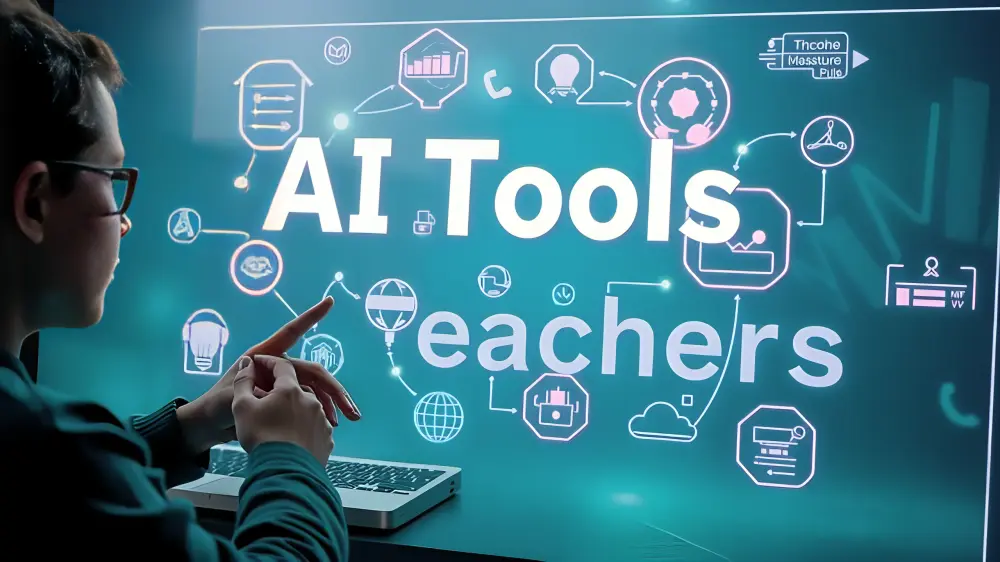

Teaching is one of the greatest yet toughest jobs in the world. From lesson planning to differentiating instruction to grading assignments and keeping students engaged, time is lost balancing multiple hats due to the nature of today. Luckily, AI tools for teachers are coming to the rescue — by saving time and minimising administrative burden while facilitating a more personalized learning experience. By 2026, these tools will be more powerful, easily accessible and education-oriented than ever before, freeing up teachers to do what they love best – inspiring their students.
AI Tools for Teachers in Action: Key Applications
Whether you are an experienced educator or just entering the classroom, using AI can help to streamline your workflow without taking away from the art and science of teaching. So now let us discuss some simple yet effective utilisation of these tools.
Revolutionizing Lesson Planning and Content Creation
Creating high-quality, standards-aligned materials to be used in our classrooms from scratch is one of the most significant time sinks for teachers. Much of the heavy lifting is now done by AI tools, while still giving teachers control over customising the output.
- MagicSchool AI: This tool, which is undoubtedly a fan favourite of teachers everywhere, provides more than 60 individual specialised tools for generating lesson plans, rubrics, quizzes, IEPs and many others. For example, teachers enter basic information about the grade level, subject, and learning objectives and get ready-to-use materials in minutes. This is especially recognised for its training in education and privacy.
- Diffit: An awesome tool for differentiation that takes any text or topic and instantly differentiates it into different reading levels. It also produces the associated vocabulary support, comprehension questions and summaries — perfect for mixed-ability classrooms.
- Eduaide.AI and Brisk Teaching: These tools are also better at developing a variety of materials, ranging from discussion prompts to gamified activities, and integrate easily into established workflows like Google Classroom or Chrome extensions.
General-purpose assistants (e.g., Google Gemini or ChatGPT (when using a prompt that mimics Edpuzzle or having an education-related teacher plan)) are still multi-use tools for brainstorming ideas with groups, writing messages to parents/writing parent communications, and resizing anything on the fly.
Supporting Personalized Learning and Student Engagement
Where AI comes into its own is in being able to provide the individualising that can be quite manual labour traditionally.
Guided through tools such as Khanmigo (from Khan Academy), these methods let students learn at their own pace, while teachers glean insights into progress from the formative assessments built into those platforms. Curipod allows you to build interactive sessions very quickly with real-time polls, drawing tools, and AI-generated tasks that will keep students engaged.
Canva for Education with artificial intelligence (AI)-enabled features and ClassPoint transform standard presentations into interactive and dynamic audiovisual content, including quizzes and gamification.
These generative AI models/tools for teachers would be a great way of bridging those gaps, accommodating those diverse learners (those who need accommodation or, on the other side of the spectrum, those looking for advanced ones), and making learning much more enjoyable with such terrific engagement.
Streamlining Grading and Feedback
Grading is essential but time-consuming. AI-assisted tools now offer efficient, consistent support:
- Gradescope uses AI to group similar answers and apply rubrics, speeding up feedback on assignments and exams.
- Many platforms, including MagicSchool and Edcafe AI, provide auto-grading with customisable rubrics, along with suggestions for personalized comments.
These tools are designed to supplement—not supplant—teacher judgement. AI can take care of the monotonous stuff and free educators to provide more value-added, deeper feedback.
Practical Considerations for Implementation
While the benefits are clear, successful adoption involves a few best practices:
- Start small: Pick one or two tools that address your biggest pain points (e.g., planning or differentiation).
- Prioritise privacy: Look for tools with strong FERPA/COPPA compliance and school-approved integrations.
- Review outputs: AI is a starting point—always check for accuracy, bias, and alignment with your teaching philosophy.
- Professional development: Many platforms offer tutorials and communities to help teachers get the most out of them.
Many tools come with generous free tiers or education discounts, making them affordable even when on a shoestring budget in 2026.
A Stronger, More Efficient Future for Education
In summary, AI tools for teachers do not aim to replace human connection in the classroom – they are here to enhance it. They free up time for meaningful interactions between students and educators from tedious tasks, allow you to differentiate efficiently at scale, and help foster creativity as well. Tools such as MagicSchool, Diffit, Eduaide, and others have opened the doors of an era that is aimed at making teaching less about paperwork and more about impact!
Spend judiciously on these innovations, try out what works for you, and just see your classroom blossom. The future of education is collaboration—between dedicated teachers and AI partners. Your students (and your nights) will thank you for it!
FAQ’s
Q1. What are AI tools in teaching?
Ans. AI tools in teaching are intelligent digital assistants designed to support an enhanced learning experience by making it more interactive, engaging, and personal. These can be anything from chatbots that give you answers right away, adaptive platforms that adapt to your pace of learning, automated grading, and content generators. Teachers free up time, students get customised assistance—and classrooms become a smarter, interactive space.
Q2. Is ChatGPT free for teachers?
Ans. Yes! Regular ChatGPT is free for all, including teachers, with suitably high daily limits. Also, OpenAI has ChatGPT for Teachers — a free version specifically designed for verified U.S. K-12 educators with greater privacy and education focus through June 2027. Simply check your eligibility to begin!
Q3. Can my teacher see if I use ChatGPT?
Ans. No, your teacher won’t be able to tell if you used ChatGPT.
They may detect it via rapid style changes, flawless grammar, or AI detectors. Regard it as an assistive device for learning, after which spice it up with your individual notions for unique work.